


 |
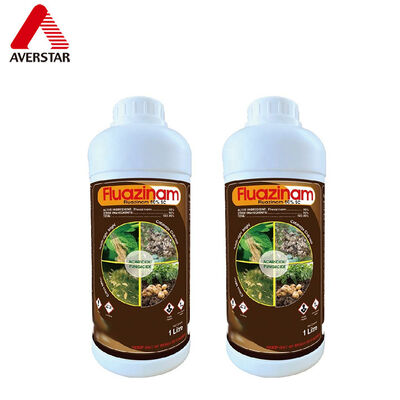
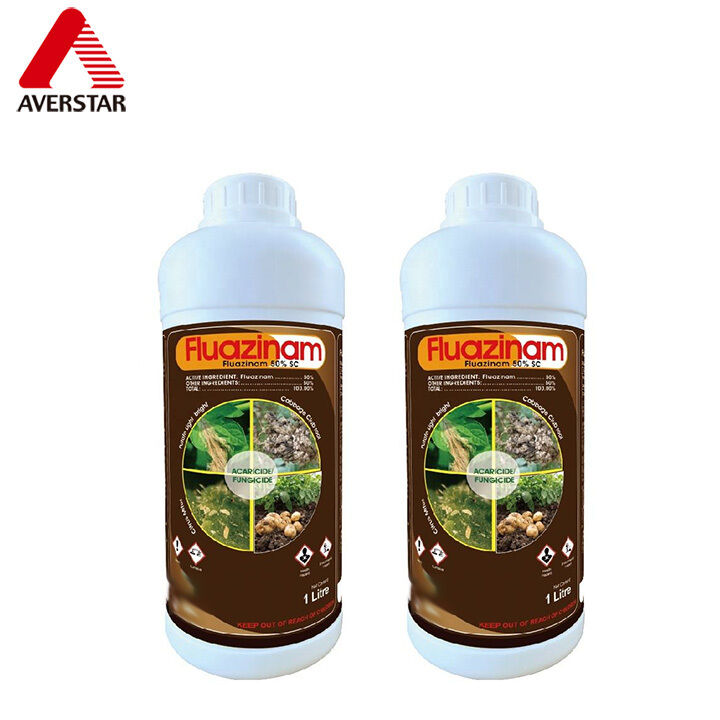
Fluazinam 50% SC Fungicide: Uses, Benefits and Disease Control
Product Details:
| Place of Origin: | Shenzhen,Guangdong,China |
| Brand Name: | AVERSTAR |
| Certification: | COA,MSDS,ISO9001 |
| Model Number: | Fluazinam 50% SC |
Payment & Shipping Terms:
| Minimum Order Quantity: | 1000L |
|---|---|
| Price: | $1-$10 |
| Packaging Details: | 100ml,200ml,500ml,1l,20l,200l |
| Delivery Time: | 3-5weeks |
| Payment Terms: | L/C,D/A,D/P,T/T |
| Supply Ability: | 10000L |
|
Detail Information |
|||
| Brand: | AVERSTAR | Active Ingredient: | Fluazinam |
|---|---|---|---|
| CAS_No: | 79622-59-6 | Molecular Formula: | C13H4Cl2F6N4O4 |
| Molecular Weight: | 465.09 | EINECS_No: | 616-712-5 |
| Mol: | 79622-59-6.mol | ||
Product Description
Crop diseases can spread quickly when weather conditions favor infection. In potato fields, for example, late blight can develop rapidly during periods of high humidity and moderate temperatures. Once the disease becomes established, controlling it is much more difficult.
This is why preventive fungicides remain important in crop protection programs.
Fluazinam 50% SC is one of the formulations used for this purpose. It is a contact fungicide with activity against several important plant pathogens, particularly those responsible for late blight and certain fungal diseases.
For farmers and agricultural distributors, the main questions are straightforward: What diseases can Fluazinam control? How does it work? And what should be considered when choosing a formulation?
Fluazinam is a fungicide from the 2,6-dinitroaniline chemical group. It is mainly used to protect crops against disease infection rather than to cure plants that are already heavily infected.
The abbreviation SC stands for Suspension Concentrate. In this formulation, finely divided particles of the active ingredient are suspended in a liquid medium with the help of formulation additives.
Unlike a soluble concentrate, the active ingredient in an SC formulation does not fully dissolve in water. Instead, the formulation is designed to disperse evenly when mixed with water for spraying.
| Item | Description |
|---|---|
| Product Name | Fluazinam 50% SC |
| Active Ingredient | Fluazinam |
| CAS Number | 79622-59-6 |
| Concentration | 50% |
| Formulation | Suspension Concentrate (SC) |
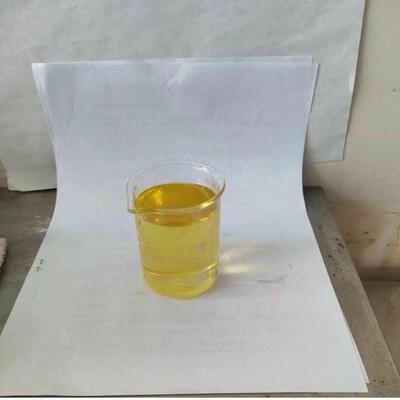
| Appearance | Usually yellow to light yellow suspension |
| Chemical Group | 2,6-Dinitroanilines |
| FRAC Group | 29 |
| Main Application | Preventive control of crop diseases |
The appearance may vary slightly between manufacturers because of differences in formulation ingredients and processing methods.
It is also worth checking how the concentration is expressed. Fluazinam 50% SC and Fluazinam 500 g/L SC are not necessarily identical specifications. The relationship depends on the formulation density and whether the percentage is expressed by weight.
Fluazinam works differently from many commonly used systemic fungicides.
Its main action is to interfere with energy production inside susceptible pathogens. More specifically, it uncouples oxidative phosphorylation in mitochondria, disrupting the process through which cells produce ATP.
Without sufficient energy, the pathogen cannot carry out normal biological activities effectively.
In practical terms, Fluazinam is particularly useful for preventing infection when it is present on the plant surface before the pathogen becomes established.
Because Fluazinam is primarily a contact fungicide, spray coverage matters. Leaves and other target surfaces need to receive adequate protection according to the product label.
It should not be treated as a substitute for a systemic curative fungicide when an infection has already progressed.
Fluazinam has activity against a range of fungal and oomycete pathogens. However, its approved uses vary by country, crop and product registration.
Some of the better-known crop disease applications are discussed below.
Late blight is one of the most serious diseases affecting potato production.
The disease is caused by Phytophthora infestans, a pathogen that develops rapidly under suitable moisture and temperature conditions.
Early symptoms often include water-soaked lesions on leaves. These may expand into brown or dark areas, particularly when conditions remain humid.
Fluazinam has been used in preventive potato late blight programs because of its activity against this pathogen.
The timing of application is important. Protection should be established before infection whenever possible, rather than waiting until severe symptoms are visible.
Gray mold is caused by Botrytis cinerea and can affect a wide range of horticultural crops.
The pathogen often develops in humid environments, particularly where plant canopies are dense and air circulation is limited.
Fluazinam has activity against Botrytis species and may be used in certain registered crop protection programs.
However, disease management should not rely on fungicide application alone. Removing infected plant material, improving ventilation and managing canopy humidity can also help reduce disease pressure.
Diseases caused by Sclerotinia sclerotiorum can affect oilseed crops and various vegetables.
The pathogen may survive in soil for extended periods through structures known as sclerotia. This makes disease management difficult, especially in fields with a history of infection.
Fluazinam is used against certain Sclerotinia diseases in markets where the relevant applications are registered.
Crop rotation, field sanitation and suitable application timing remain important parts of the overall management program.
Fluazinam also has activity against certain soilborne pathogens, including those associated with southern blight in peanuts.
Soilborne diseases can be difficult to manage because the pathogens may survive in crop residues or soil between growing seasons.
The suitability of Fluazinam for these applications depends on the specific crop, pathogen, formulation and registered application method.
One reason Fluazinam remains relevant in crop protection is its distinct mode of action.
It belongs to FRAC Group 29, which differs from several other widely used fungicide groups.
This makes it a possible rotation partner in disease management programs designed to reduce repeated reliance on fungicides with the same mode of action.
However, rotating fungicides does not automatically prevent resistance. Growers still need to follow local recommendations, observe application limits and use other disease management practices.
Another consideration is the protective nature of Fluazinam.
When disease pressure is high, the interval between applications, weather conditions and the quality of spray coverage can influence performance. These factors should be managed according to the registered label and local agronomic guidance.
For agricultural importers and distributors, the active ingredient concentration is only one part of product quality.
The physical properties of an SC formulation also deserve attention.
A suspension concentrate should disperse properly in water and maintain acceptable physical stability during storage and handling.
Several properties are commonly evaluated during formulation quality control.
Suspensibility
This indicates how well the active ingredient remains suspended after the product has been diluted with water.
Poor suspensibility may contribute to uneven distribution during application.
Wet Sieve Performance
This test helps identify oversized particles or agglomerates that could affect spraying equipment.
Pourability
A liquid pesticide should be practical to pour from its container, with acceptable residue remaining after emptying and rinsing according to the applicable test method.
Storage Stability
Storage testing helps determine whether the formulation maintains acceptable chemical and physical properties under specified conditions.
A product that looks uniform when first manufactured may still develop problems during prolonged storage if its formulation is not sufficiently stable.
For this reason, buyers should review the product specification and Certificate of Analysis rather than relying on appearance alone.
Fluazinam is generally used as a preventive treatment.
The appropriate application rate and timing depend on the crop, disease, product concentration and local registration.
Before application, growers should confirm the target disease and check that the product is approved for the intended crop.
Good spray coverage is particularly important for contact fungicides. Application equipment should be properly calibrated, and spraying should follow the conditions described on the label.
Growers should also consider rainfall, disease pressure and crop growth when planning a treatment program.
Pre-harvest intervals, re-entry restrictions and maximum application limits must be observed.
Fluazinam products may present health and environmental hazards, including skin sensitization and risks to aquatic organisms. Appropriate protective equipment and measures to prevent spray drift and water contamination are essential.
Agricultural chemical regulations differ considerably between countries.
A formulation accepted in one market may require different documentation, labeling or registration in another.
For importers, it is useful to confirm the destination market before discussing packaging and commercial quantities.
Buyers commonly request technical specifications, a Certificate of Analysis, a Safety Data Sheet and information about available packaging sizes.
Some markets may also require additional registration data or specific labeling information.
These requirements should be clarified early, particularly when the product is intended for private-label distribution.
AVERSTAR works with international agricultural chemical customers on product sourcing and supply inquiries.
For Fluazinam 50% SC, buyers can contact the AVERSTAR team to discuss the required concentration, formulation specifications, packaging preferences and destination market.
Technical documentation, product availability, packaging arrangements and commercial terms can be confirmed according to the individual inquiry.
Providing the intended market and estimated order quantity helps make the quotation process more efficient.
Fluazinam is primarily a contact fungicide. It protects treated surfaces and is generally used before infection occurs. It does not provide the same systemic movement or curative activity as certain other fungicides.
The two descriptions use different concentration units. A 50% formulation is generally expressed on a weight basis, while 500 g/L describes the mass of active ingredient in one liter of product. Product density must be considered before confirming equivalence.
Yes. Fluazinam is used in registered potato disease management programs, particularly for late blight prevention. Application rates and timing must follow the locally approved product label.
It is commonly a yellow to light yellow suspension, although the exact appearance depends on the formulation. Color alone is not a reliable indicator of product quality.
Fluazinam is primarily a fungicide, not a conventional insecticide. Some formulations have acaricidal activity, but Fluazinam should not be selected for insect control unless the intended use is specifically registered.
Common documents include the product specification, Certificate of Analysis and Safety Data Sheet. Additional documents may be necessary depending on the destination country's regulatory requirements.
Fluazinam 50% SC is mainly valued for its preventive activity against important crop diseases and its distinct FRAC Group 29 mode of action.
Its performance depends on choosing the correct application, treating at the appropriate time and achieving adequate coverage.
For agricultural distributors, formulation quality and regulatory suitability are just as important as the active ingredient itself.
Buyers interested in Fluazinam 50% SC can contact AVERSTAR to discuss product specifications, documentation and supply requirements.
