


 |
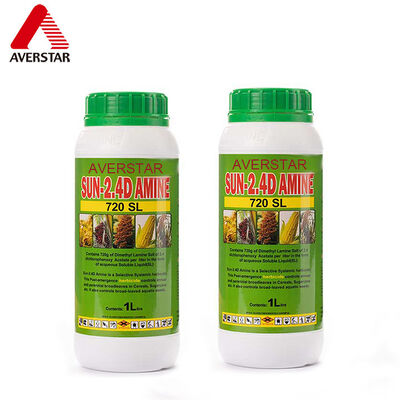
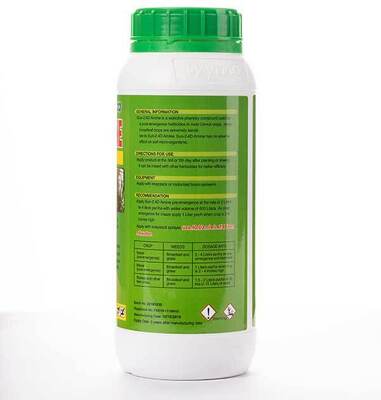
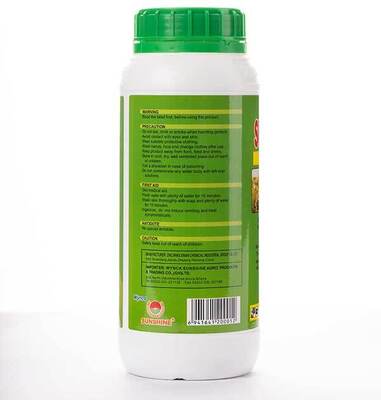
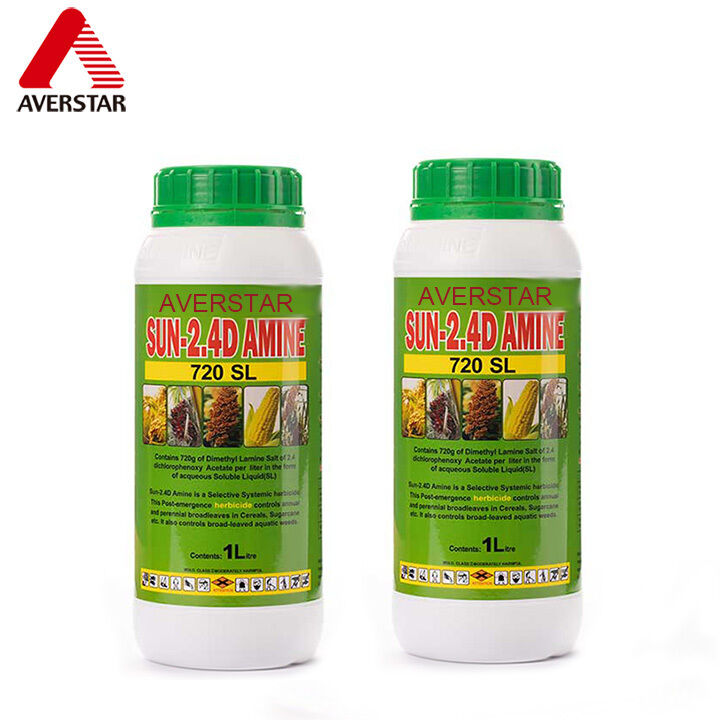
2,4-D 720 g/L SL Herbicide for Agricultural Weed Control
Product Details:
| Place of Origin: | Shenzhen,Guangdong,China |
| Brand Name: | AVERSTAR |
| Certification: | COA,MSDS,ISO |
| Model Number: | 2,4-D 720 g/L SL |
Payment & Shipping Terms:
| Minimum Order Quantity: | 1000L |
|---|---|
| Price: | $1-$10 |
| Packaging Details: | 500ml,1l,20l,200l |
| Delivery Time: | 3-5weeks |
| Payment Terms: | T/T,D/P,D/A,L/C |
| Supply Ability: | 10000L |
|
Detail Information |
|||
| Brand: | AVERSTAR | Product Name: | 2,4-Dichlorophenoxyacetic Acid |
|---|---|---|---|
| CAS_No: | 94-75-7 | EINECS_No: | 202-361-1 |
| Molecular Formula: | C8H6Cl2O3 | Molecular Weight: | 221.04 |
| Mol: | 94-75-7.mol | ||
Product Description
2,4-D 720 g/L SL is a concentrated herbicide formulation based on 2,4-D, a widely known selective herbicide used for managing susceptible broadleaf weeds. It belongs to the synthetic auxin herbicide group and has a long history of use in agricultural weed management.
Broadleaf weeds compete with crops for sunlight, water, nutrients, and growing space. When weed populations become difficult to manage, they can interfere with crop establishment, harvesting operations, and overall field management. Selecting an appropriate herbicide program is therefore an important part of modern agricultural production.
2,4-D herbicides are primarily designed to control susceptible broadleaf weeds in approved application sites. Depending on the registered formulation and local regulations, these products may be used in certain cereal crops, grassland, pastures, and other authorized areas.
The 720 g/L concentration indicates that the formulation contains 720 grams of the specified 2,4-D active ingredient per liter. However, buyers should confirm whether the specification refers to the active ingredient itself or an acid-equivalent concentration, as this can vary between formulations and product labels.
AVERSTAR Chemical provides agricultural chemical supply solutions for importers, distributors, wholesalers, and other professional buyers. For businesses evaluating 2,4-D 720 g/L SL, accurate product specifications, regulatory documentation, packaging details, and destination-market requirements are essential considerations.
2,4-D is the common name for 2,4-dichlorophenoxyacetic acid, a synthetic auxin herbicide. It was among the early selective herbicides developed for agricultural weed control and remains an important active ingredient in many registered herbicide products.
Its principal function is to interfere with normal plant growth in susceptible broadleaf weeds. Unlike non-selective herbicides intended to control a wide range of vegetation, 2,4-D is used selectively in certain crops and application sites where the target weeds are more sensitive than the crop.
The selectivity of 2,4-D depends on several factors, including crop species, formulation, application rate, growth stage, environmental conditions, and the way the herbicide is absorbed and metabolized by plants.
Common name: 2,4-D
Chemical name: 2,4-dichlorophenoxyacetic acid
CAS number of the acid: 94-75-7
Herbicide category: Selective herbicide
Chemical group: Synthetic auxin
HRAC/WSSA mode-of-action group: Group 4
Primary target: Susceptible broadleaf weeds
Product formulation discussed: SL, subject to confirmation of the commercial formulation
Some commercial 2,4-D products contain salts or esters rather than the free acid. Their chemical identity, concentration expression, physical properties, and handling requirements may differ. For this reason, the manufacturer's specification sheet and product label should be used to establish the exact composition of 2,4-D 720 g/L SL.
Product specifications help agricultural distributors and importers evaluate whether a formulation meets their technical and commercial requirements.
The following table summarizes the basic information associated with this product name. Details that depend on the actual manufacturing specification should be confirmed before publication or purchase.
| Parameter | Description |
|---|---|
| Product name | 2,4-D 720 g/L SL Herbicide |
| Active ingredient | 2,4-D or the specified 2,4-D form |
| Nominal concentration | 720 g/L |
| Formulation | SL, soluble concentrate |
| Product category | Selective herbicide |
| Mode of action | Synthetic auxin, Group 4 |
| Main target | Susceptible broadleaf weeds |
| Application | Only approved crops and sites |
| Packaging | Confirm with supplier |
| Shelf life | Refer to the manufacturer's label |
| Storage conditions | Follow the product label and safety data sheet |
| Registration status | Depends on the destination market |
The term SL generally refers to a soluble concentrate designed to form a solution when diluted with water. The actual formulation properties must be confirmed for the specific product. Do not assume that all products marketed as 2,4-D 720 g/L have identical composition, solubility, or performance.
Understanding the mode of action of 2,4-D helps explain why it is used for broadleaf weed management and why correct application timing matters.
Depending on the formulation and application method, 2,4-D can be absorbed mainly through plant foliage. Following absorption, the active ingredient moves within susceptible plants and affects growth-regulating processes.
The degree of absorption and movement depends on plant condition, weed species, formulation, and environmental factors.
2,4-D acts as a synthetic auxin, imitating the activity of natural plant growth hormones. In susceptible plants, excessive auxin-like activity disrupts normal growth regulation.
Affected weeds may develop abnormal leaf and stem growth, curling, twisting, and other symptoms of herbicide injury. Physiological processes become impaired, and severe injury may eventually lead to plant death.
Not every weed species responds equally to 2,4-D. Some broadleaf weeds are highly susceptible, while others may be less sensitive or require a different management approach.
Plant size, growth stage, environmental stress, and herbicide resistance can also influence the level of control. Therefore, product selection should be based on the target weed species and the approved directions for use.
Application timing is a major factor in successful weed management. In registered crop uses, treatments are generally scheduled according to the crop growth stage and the susceptibility of the target weeds.
Applying a herbicide outside the permitted crop stage can increase the risk of crop injury, yield loss, or unacceptable residues. Always follow the specific label rather than relying on general recommendations for other 2,4-D formulations.
2,4-D is used in several agricultural weed-management systems. However, the permitted uses of a 720 g/L SL formulation depend on its registration and the product label in the destination country.
Certain registered 2,4-D formulations are used to manage susceptible broadleaf weeds in wheat and other approved cereal crops.
Broadleaf weeds can compete with cereal plants during important growth stages. A suitable weed-management program may help reduce this competition and support more efficient field operations.
Before using 2,4-D in a cereal crop, farmers should verify:
Whether the crop is listed on the product label.
Which broadleaf weed species are controlled.
The permitted crop and weed growth stages.
The recommended application rate and spray volume.
Any restrictions relating to crop rotation or subsequent planting.
Crop tolerance can vary according to the formulation and application timing. The label for the exact product takes priority over general information about the active ingredient.
Some 2,4-D products are registered for managing susceptible broadleaf weeds in pastures and grassland. These applications may help maintain suitable grass cover and reduce unwanted broadleaf vegetation.
However, not every grass species has the same tolerance to 2,4-D. Some desirable plants may be sensitive, and nearby susceptible vegetation can be damaged by spray drift.
In grazing systems, users should also check livestock access restrictions, grazing intervals, and other requirements on the approved label.
Certain registered formulations may be used in designated non-crop areas where broadleaf vegetation needs to be managed. Examples can include selected industrial or roadside sites, depending on the product registration and local rules.
Users must confirm that the intended location is an approved application site. Treatment near waterways, residential areas, sensitive vegetation, or agricultural crops may require additional precautions or may be prohibited.
Herbicides work best as part of an integrated weed-management strategy. Depending on the farming system, this may include crop rotation, competitive crop establishment, mechanical weed control, monitoring, and the use of herbicides with different modes of action.
An integrated approach can help reduce selection pressure for herbicide resistance and improve the long-term sustainability of weed management.
The suitability of 2,4-D 720 g/L SL depends on the requirements of the intended application and the characteristics of the specific formulation.
2,4-D is primarily used against susceptible broadleaf weeds. In approved grass crops and other registered sites, its selectivity can provide an option for managing broadleaf weeds without relying exclusively on non-selective vegetation control.
Selectivity is not absolute. Crop species, application timing, dose, weather, and formulation all influence crop safety.
A nominal concentration of 720 g/L represents a concentrated product. Concentration alone, however, does not determine the correct field application rate or the total treatment area.
Buyers should compare the exact concentration expression, formulation type, recommended rate, packaging, and registration details when evaluating different suppliers.
Depending on local registration, 2,4-D may be included in a broader weed-management program. Any tank mixing or sequential application should be supported by the product label and, where necessary, professional agronomic advice.
Do not mix products simply because they are commonly used on the same crop. Physical compatibility, crop safety, efficacy, and legal authorization all need to be considered.
Liquid formulations can offer convenient handling and measurement when used with suitable equipment. Nevertheless, operators should follow the specified dilution procedures, wear the required protective equipment, and prevent contamination during mixing and loading.
Correct application is essential for weed control, crop safety, and environmental protection.
Identify the weeds present in the field before choosing a herbicide. Confirm whether the species are susceptible to 2,4-D and whether the product is registered for the intended use.
If the field contains a mixture of broadleaf and grass weeds, a different or integrated weed-management strategy may be needed.
Review the product label for the permitted crop growth stage and application window. Some crops can be particularly sensitive to 2,4-D at specific stages of development.
Do not transfer application timings from another formulation without checking the label.
Use only the application rate specified on the registered product label. The concentration of 720 g/L does not, by itself, establish how much product should be applied per hectare.
The correct rate depends on the formulation, target weed, crop, and authorized use pattern.
Wind, temperature, humidity, rainfall, and other environmental conditions can influence application performance and the risk of off-target movement.
Avoid spraying under conditions that could cause drift onto sensitive crops or other desirable plants. Follow the label's requirements concerning rainfall, wind, and other weather restrictions.
Calibrated equipment helps deliver the intended application rate and maintain consistent spray coverage. Check the equipment for leaks, blockages, and correct operation before use.
Clean equipment according to the product label, especially before using it on crops that may be sensitive to 2,4-D residues.
Operators should use the personal protective equipment specified on the label and safety data sheet. Avoid skin and eye contact, inhalation of spray mist, and unnecessary exposure during mixing and application.
Prevent spray, rinsate, and unused product from entering drains, wells, surface water, or other sensitive areas. Observe all applicable re-entry, harvest, grazing, and disposal requirements.
Herbicide resistance is an increasingly important issue in agricultural production. Repeated use of the same herbicide mode of action can select for weed populations that are less sensitive to treatment.
2,4-D belongs to HRAC/WSSA Group 4. To help manage resistance risk, users should consider the following practices:
Rotate herbicide modes of action where suitable registered alternatives are available.
Use integrated weed-management practices rather than relying on a single herbicide.
Prevent surviving weeds from producing and spreading seeds.
Monitor treated fields to evaluate weed-control performance.
Investigate unexpected treatment failures instead of automatically increasing the application rate.
Follow local resistance-management recommendations and approved product labels.
Resistance management should be based on the weed species, cropping system, and local agricultural guidance. Using different brand names does not necessarily mean using different modes of action.
Appropriate storage and handling help maintain product quality and reduce risks to people and the environment.
Store the product in its original, properly closed container in a secure, designated storage area. Follow the manufacturer's specified temperature range and protect the product from conditions identified as unsuitable on the label.
Keep herbicides away from food, animal feed, drinking water, and unauthorized access. Ensure that the storage area meets local chemical-storage requirements.
Read the label and safety data sheet before opening the container. Use appropriate protective equipment during handling and avoid direct contact with the product.
Do not reuse empty pesticide containers for household or food-related purposes. Manage empty packaging and any remaining product according to the label and local waste regulations.
For international orders, packaging specifications should be confirmed with the supplier. Buyers should also verify the relevant transport classification, labeling, safety documentation, and import requirements before shipment.
Requirements may differ according to the exact chemical form, formulation, package size, and destination country. Export documentation should reflect the actual product being shipped.
For importers and distributors, evaluating a 2,4-D 720 g/L SL product involves more than comparing its nominal concentration or quoted price.
Check the product's technical specification to establish the exact chemical form, concentration basis, and formulation type. This is especially important when comparing acid-equivalent concentrations with concentrations expressed as a salt or ester.
Depending on the market and transaction, buyers may need a technical data sheet, safety data sheet, certificate of analysis, product label, and supporting registration documentation.
Documents should correspond to the actual formulation and manufacturing source.
Pesticide registration rules differ by country. A formulation that is authorized in one market may require separate approval or may not be permitted in another.
Before placing an order, confirm the local registration status, import authorization, labeling requirements, and any applicable restrictions.
Packaging options, minimum order quantities, lead times, and shipping arrangements should be confirmed directly with the supplier. Buyers should also clarify the required delivery terms and documentation before finalizing a purchase.
A clear technical and commercial review can help reduce misunderstandings and support more efficient procurement.
AVERSTAR Chemical works with international agricultural chemical buyers seeking product information and supply options for their markets.
For businesses interested in 2,4-D 720 g/L SL, the purchasing process can include a review of technical specifications, formulation details, packaging options, and destination-market requirements.
AVERSTAR can discuss the following subjects with prospective buyers, subject to actual product availability and applicable regulations:
Product specifications and active ingredient information.
Available packaging and minimum order quantities.
Technical and safety documentation for review.
Export quotation and shipping arrangements.
Destination-specific documentation requirements.
Other agricultural chemical products suited to the buyer's registered product portfolio.
Product availability, manufacturing details, export eligibility, and registration status should be confirmed before an order is accepted.
For importers and distributors, providing the destination country, required quantity, preferred packaging, and relevant technical specifications can help make quotation discussions more efficient.
2,4-D 720 g/L SL is a concentrated herbicide formulation identified by its nominal 2,4-D concentration and SL formulation type. It is intended for controlling susceptible broadleaf weeds in approved application sites.
2,4-D primarily controls susceptible broadleaf weeds. The exact weed spectrum depends on the formulation, target species, application timing, and registered use. Always consult the approved product label.
2,4-D acts as a synthetic auxin herbicide and belongs to HRAC/WSSA Group 4. It disrupts normal growth regulation in susceptible plants, causing abnormal development and potentially plant death.
Some 2,4-D formulations are registered for broadleaf weed control in wheat. Whether this particular formulation is suitable depends on the destination country's registration and its permitted application timing and crop growth stage.
2,4-D is primarily used against susceptible broadleaf weeds. It should not be assumed to provide reliable control of established grass weeds. A suitable registered product should be selected according to the target species.
2,4-D is generally classified as a selective herbicide when used according to an approved label. However, it can injure sensitive crops and non-target broadleaf plants, particularly when applied incorrectly or when spray drift occurs.
SL generally means soluble concentrate, a formulation designed to form a solution when diluted with water. The exact formulation characteristics should be verified against the manufacturer's documentation.
Not necessarily. Product specifications may express concentration differently depending on the chemical form and whether the figure refers to the salt, ester, active ingredient, or acid equivalent. Buyers should verify the concentration basis before comparing products.
Packaging depends on the specific manufacturer, product specification, and destination-market requirements. Contact AVERSTAR to discuss available packaging, minimum order quantities, and export arrangements.
Tank mixing should only be considered when the combination is permitted by the product labels and supported by suitable compatibility and crop-safety information. Do not assume that all herbicide combinations are compatible or legally authorized.
Store the product in its original, securely closed container under the conditions specified on the label and safety data sheet. Keep it away from food, feed, water sources, and unauthorized access.
Buyers can contact AVERSTAR through its official website, averstar1.com, and provide the destination country, required quantity, preferred packaging, and relevant product specifications. Supply availability and export terms can then be discussed.
2,4-D 720 g/L SL is a concentrated herbicide product intended for the management of susceptible broadleaf weeds in approved application sites. Its synthetic auxin mode of action makes it an established option in certain agricultural weed-management programs.
Successful use depends on selecting the correct formulation, identifying susceptible target weeds, following the approved application rate, applying at the appropriate crop growth stage, and taking measures to protect sensitive plants and the environment.
For agricultural importers, distributors, and professional buyers, confirming the active ingredient specification, concentration basis, registration status, packaging, and technical documentation is essential when evaluating a 2,4-D 720 g/L SL product.
AVERSTAR Chemical welcomes inquiries from international buyers seeking product information and export supply options. Visit averstar1.com to discuss your requirements and obtain further information about available products and commercial arrangements.
