


 |
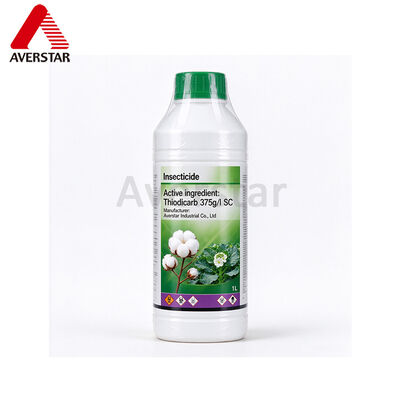
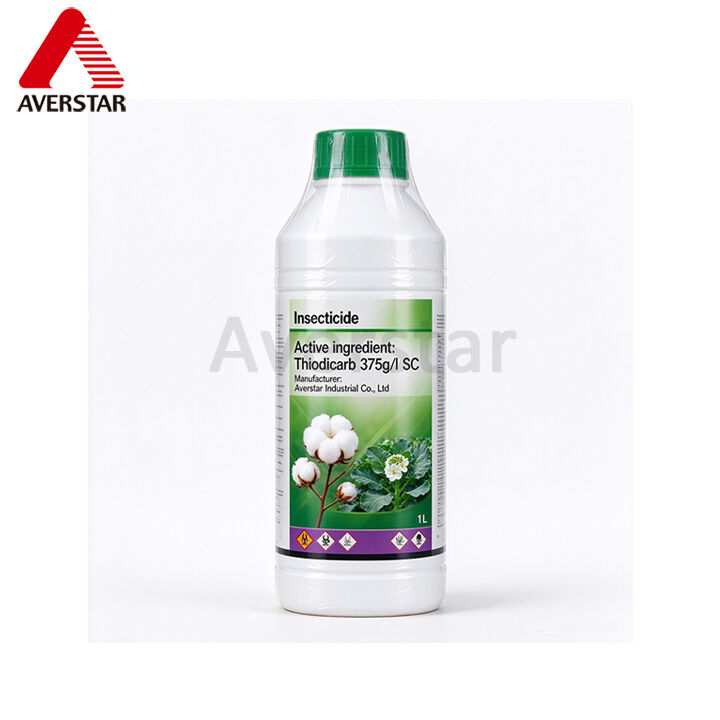
Thiodicarb 375g/L SC Chemical Insecticide widely used for maize and cotton
Product Details:
| Place of Origin: | China |
| Brand Name: | Averstar |
| Certification: | COA, MSDS |
| Model Number: | 375g/l SC |
Payment & Shipping Terms:
| Minimum Order Quantity: | 1000 liter |
|---|---|
| Price: | $5-30 per liter |
| Packaging Details: | 1L/bottle |
| Delivery Time: | 20 days |
| Payment Terms: | L/C,T/T |
| Supply Ability: | 10000 liter per month |
|
Detail Information |
|||
| Regulatorystatus: | Approved By Relevant Agricultural And Environmental Authorities | Mol: | 380.54 G/mol |
|---|---|---|---|
| Port: | Shanghai Seaport | Toxicitylevel: | Varies (Low To High) |
| EINECS: | 261-848-7 | Cas Number: | 59669-26-0 |
| Product Type: | Insecticide / Acaricide | ||
| Highlight: | Thiodicarb 375g/L SC insecticide,chemical insecticide for maize,chemical insecticide for cotton |
||
Product Description
1. Basic Product Information
Product Name: Thiodicarb 375 g/L Suspension Concentrate Common Name: Thiodicarb Formulation: SC (Suspension Concentrate) Active Ingredient: Thiodicarb 375 g/L Pesticide Type: Insecticide IRAC Group: 1A (Carbamates) Product Introduction: Thiodicarb is a thiocarbamate selective insecticide, mainly with stomach poisoning plus contact activity. It controls a wide spectrum of pests, especially lepidopteran larvae. Once entering the insect body, it is metabolized into methomyl to exert insecticidal effect. It is a water-based SC formulation, dust-free, stable suspension, good adhesion and safe to crops. Suitable for knapsack spray and mechanized application.
2. Mode of Action
After absorption by pests, thiodicarb is converted into methomyl inside the pest body. It inhibits the activity of acetylcholinesterase (AChE). Acetylcholine accumulates at nerve synapses, causing over-excitation, convulsion and paralysis of pests. The pests stop feeding and die eventually. Primary action: stomach poison; secondary: contact action. It also shows certain ovicidal activity, best against young larvae. Note: Acetylcholinesterase inhibitor (IRAC group 1A). Continuous exclusive use will accelerate pest resistance. Rotate with insecticides from different IRAC groups.
3. Applicable Crops & Target Pests
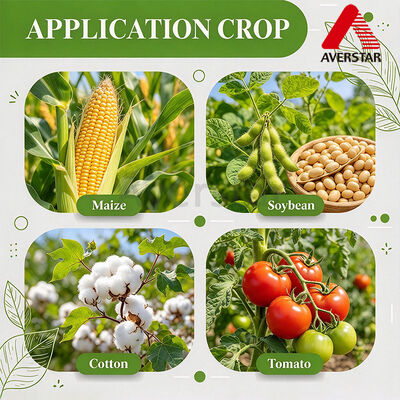
✅ Applicable crops: Cotton, rice, cabbage and other brassica vegetables, soybean, corn, peanut, apple ✅ Target pests: Cotton bollworm, rice leaf roller, diamondback moth, beet armyworm, spodoptera litura, cabbage caterpillar, bean pod borer, corn borer, leafroller and other lepidopteran larvae
4. Recommended Dosage & Application Table
Instruction: Foliar uniform spray after dilution; focus on tender shoots, flowers, young fruits and leaf back. Best timing: peak egg hatch to young larval stage. Follow the maximum application frequency and pre-harvest interval (PHI) on local registration label.
| Crop | Target Pest | Formulation Rate | Water Volume | Application Method | Application Timing |
|---|---|---|---|---|---|
| Cotton | Cotton bollworm | 80–120 mL / mu | 30–45 kg / mu | Foliar spray | Peak egg hatch, young larval stage |
| Rice | Rice leaf roller | 70–100 mL / mu | 30–45 kg / mu | Foliar spray | Egg hatch to 1st–3rd instar larvae |
| Cabbage | Diamondback moth, cabbage caterpillar | 60–90 mL / mu | 30–45 kg / mu | Foliar spray | Peak egg hatch, young larval stage |
| Soybean | Bean pod borer, Spodoptera litura | 75–110 mL / mu | 30–45 kg / mu | Foliar spray | Flowering & podding stage, young larvae |
| Corn | Corn borer | 80–120 mL / mu | 30–45 kg / mu | Foliar spray | Late whorl stage, peak egg hatch |
Application Tips
- Prepare stock solution with a small amount of water first, then add remaining water and stir well.
- Avoid spraying under high temperature at noon. If rain occurs within 2 hours after application, re-spray after rain stops.
- Do not tank-mix with strong alkaline pesticides such as Bordeaux mixture and lime sulphur, which cause active ingredient decomposition.
- High risk to bees, silkworms and fish. Do not apply during blooming period or near mulberry fields and aquaculture ponds.
5. Personal Protection
- Wear long-sleeve protective clothing, chemical resistant rubber gloves, goggles, respirator and rubber boots during mixing and spraying.
- Do not eat, drink or smoke during operation. Do not touch eyes, mouth or nose with contaminated hands.
- Pregnant women, breastfeeding women, minors and people with a history of cholinesterase disease are prohibited from handling.
- After application, wash all exposed skin thoroughly with soap and water; launder protective clothes separately.
- Do not discharge unused spray liquid or wash water into rivers and ponds. Collect empty containers for designated recycling.
6. First Aid
- Skin contact: Remove contaminated clothing immediately. Wash skin with plenty of running water and soap for at least 15 minutes. Seek medical help if irritation occurs.
- Eye contact: Hold eyelids open, flush eyes continuously with clean running water for more than 15 minutes and seek medical treatment quickly.
- Inhalation: Move victim to fresh air, keep airway open. Give oxygen if breathing difficulty; perform CPR if breathing stops and rush to hospital.
- Ingestion: This is carbamate pesticide. Oxime antidotes (e.g. pralidoxime) are NOT recommended; atropine may be used by doctor. Bring the product label and send patient to hospital immediately for symptomatic treatment.
7. Storage & Transportation
- Keep tightly sealed in cool, dry, ventilated warehouse, away from heat and fire source, protect from direct sunlight. Suitable storage temperature: 0–30℃.
- Never store together with food, grain, feed, seeds or daily consumer goods. Keep out of reach of children and livestock.
- Prevent extrusion, collision and package breakage during transport. Keep away from rain and sunlight; do not ship together with strong alkaline or flammable goods.
- If leakage occurs, absorb with sand; do not flush leakage directly into drains.
8. Important Remarks
- High toxicity risk to bees, silkworms and aquatic organisms. Prohibited on blooming nectar crops. Keep away from mulberry gardens and aquaculture zones.
- To manage pest resistance, avoid repeated continuous use alone. Rotate with insecticides of different IRAC codes.
- Use strictly according to registered dosage; over-dose may lead to phytotoxicity and excessive residue.
- Follow the pre-harvest interval (PHI) specified by local registration for each crop.
