


 |
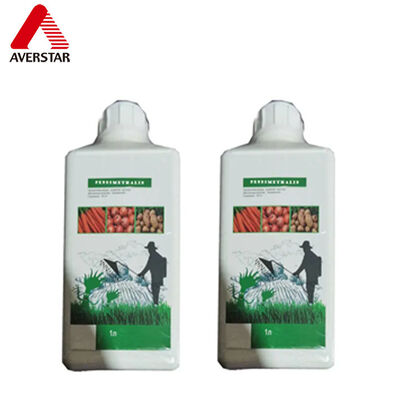
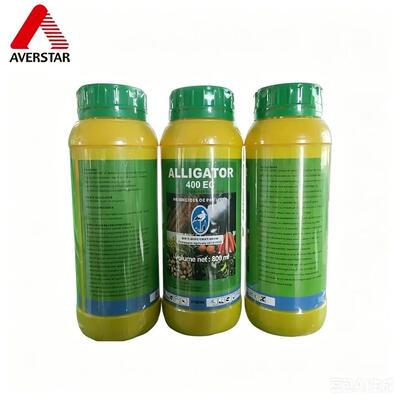
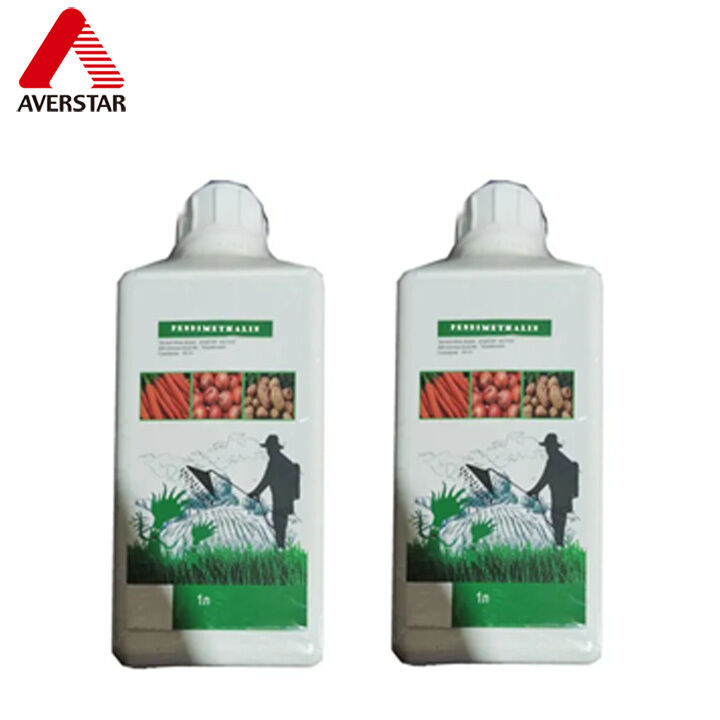
Pendimethalin 33% EC Herbicide | Uses & Weed Control
Product Details:
| Place of Origin: | Shenzhen,Guangdong,China |
| Brand Name: | AVERSTAR |
| Certification: | COA,MSDS,ISO9001 |
| Model Number: | Pendimethalin 33% EC |
Payment & Shipping Terms:
| Minimum Order Quantity: | 1000L |
|---|---|
| Price: | $1-$10 |
| Packaging Details: | 250ml,500ml,1l,20l,200l |
| Delivery Time: | 3-5weeks |
| Payment Terms: | L/C,D/A,D/P,T/T |
| Supply Ability: | 10000L |
|
Detail Information |
|||
| Brand: | AVERSTAR | Product Name: | Pendimethalin |
|---|---|---|---|
| CAS_No: | 40487-42-1 | Molecular Formula: | C13H19N3O4 |
| Molecular Weight: | 281.31 | EINECS_No: | 254-938-2 |
| Mol: | 40487-42-1.mol | ||
Product Description
Effective weed management is essential for maintaining crop productivity and reducing competition for water, nutrients, sunlight, and growing space. In many agricultural production systems, controlling weeds before they emerge is an important part of establishing healthy crops.
Pendimethalin 33% EC is a selective herbicide formulation widely associated with pre-emergence weed control. It contains pendimethalin, a dinitroaniline herbicide used to manage susceptible annual grasses and certain broadleaf weeds in a variety of crops.
For agricultural importers, distributors, and crop protection professionals, understanding the mode of action, target weeds, application considerations, and product characteristics of Pendimethalin 33% EC can help support informed product selection.
Pendimethalin is a selective herbicide belonging to the dinitroaniline chemical family. It is primarily used as a soil-applied herbicide to control susceptible weeds during germination and early seedling development.
The designation 33% EC generally refers to an emulsifiable concentrate formulation containing approximately 33% pendimethalin, with the exact concentration basis and equivalent g/L value determined by the registered formulation specification.
EC formulations are liquid concentrates designed to form an emulsion when diluted with water according to the product label.
Pendimethalin is used in weed management programs for various agricultural crops, subject to national registration requirements and crop-specific application instructions.
Pendimethalin belongs to HRAC/WSSA Group 3, a group of herbicides that inhibit microtubule assembly.
Microtubules are essential components of plant cells and play an important role in cell division and normal seedling development.
When susceptible germinating weeds absorb pendimethalin through their emerging roots and shoots, the herbicide interferes with normal cell division and growth.
As a result, affected seedlings may fail to emerge or develop normally.
The primary characteristics of its mode of action include:
Inhibition of microtubule assembly in susceptible weeds.
Disruption of normal cell division and seedling growth.
Control of weeds during germination and early development.
Residual soil activity under suitable application conditions.
Unlike many post-emergence herbicides, pendimethalin does not generally provide effective control of well-established weeds.
For this reason, application timing is especially important.
Pendimethalin is primarily used to control susceptible annual grasses and selected small-seeded broadleaf weeds.
Its weed control spectrum varies according to soil conditions, application timing, weed species, and the approved product label.
Pendimethalin may be used against susceptible annual grasses, including certain species of:
Barnyardgrass (Echinochloa spp.).
Foxtail (Setaria spp.).
Crabgrass (Digitaria spp.).
Goosegrass (Eleusine indica).
Control performance depends on the susceptibility of the weed population and appropriate application conditions.
Pendimethalin also provides activity against certain annual broadleaf weeds, including susceptible species of:
Pigweed (Amaranthus spp.).
Lambsquarters (Chenopodium spp.).
Purslane (Portulaca oleracea).
However, pendimethalin does not control all broadleaf weeds equally, and some species may show limited susceptibility.
Pendimethalin is generally not suitable for controlling established perennial weeds with extensive root systems.
It should also not be considered a substitute for post-emergence herbicides when weeds have already developed beyond the susceptible growth stage.
An effective weed management program should account for the weed species present, their growth stages, and the history of herbicide use in the field.
Pendimethalin is used in a variety of agricultural systems, depending on the specific formulation and national registration.
In cotton production, early-season weed competition can affect crop establishment and growth.
Pendimethalin-based herbicides may be used as part of pre-emergence or approved pre-plant weed management programs to reduce the emergence of susceptible annual weeds.
Application timing and soil placement are important to maintain crop selectivity.
Soybean fields are vulnerable to competition from annual grasses and broadleaf weeds during early crop development.
Pendimethalin may contribute to residual weed control programs when applied according to the registered product label.
It is often considered alongside other herbicide modes of action to broaden weed control and support resistance management.
In markets where registered for maize, pendimethalin can be used in selected early-season weed management programs.
Appropriate application timing, soil conditions, and crop safety precautions are essential.
Groundnut production can be affected by early weed competition.
Pendimethalin is used in some production systems to manage susceptible annual weeds before they become established.
Certain pendimethalin formulations are registered for selected vegetable crops.
However, crop tolerance varies significantly, and incorrect application can cause crop injury.
Only crops and application methods specifically approved on the local product label should be considered.
Important: The crop examples above describe established agricultural uses of pendimethalin as an active ingredient. They do not imply that every Pendimethalin 33% EC product is registered for all these crops.
Pendimethalin targets susceptible weeds during germination, helping reduce weed establishment before significant competition develops.
When applied correctly, pendimethalin can provide residual control of susceptible weeds for a period influenced by soil properties, moisture, temperature, and environmental conditions.
Its activity against certain annual grasses and broadleaf weeds makes it a useful component of integrated weed management programs.
Pendimethalin can be incorporated into broader weed management strategies involving different herbicide modes of action, mechanical weed control, and appropriate agronomic practices.
Tank mixing should only be performed when supported by the product label and compatibility information.
Correct application is essential for achieving reliable weed control with Pendimethalin 33% EC.
Pendimethalin generally performs best when applied before target weeds emerge.
It is not intended to provide effective control of large, established weeds.
Adequate soil moisture is important for activating soil-applied herbicides and positioning the active ingredient where susceptible weeds germinate.
Depending on the label, rainfall or irrigation may be required for activation.
Soil texture, organic matter content, and other soil characteristics can affect pendimethalin availability and weed control performance.
Application rates and methods must follow the registered label for the specific crop and soil conditions.
Improper soil incorporation, application timing, or placement may reduce weed control or increase the risk of crop injury.
Users should follow the approved application method, including any specific requirements for pre-plant incorporation or pre-emergence treatments.
Herbicide resistance is an important consideration in long-term weed management.
Pendimethalin belongs to HRAC/WSSA Group 3, which means it has a different mode of action from many commonly used post-emergence herbicides.
However, repeated reliance on a single herbicide mode of action can select resistant weed populations.
To reduce resistance risk, agricultural professionals should:
Rotate herbicides with effective alternative modes of action.
Use registered mixtures where appropriate.
Combine chemical weed control with cultural and mechanical practices.
Monitor fields for surviving weeds and changes in control performance.
Prevent surviving weeds from producing and spreading seeds.
Follow local resistance management recommendations.
Herbicide rotation alone does not guarantee resistance prevention. Effective integrated weed management requires multiple complementary practices.
Pendimethalin products must be handled and applied according to the approved label and safety data sheet.
Important considerations include:
Wearing appropriate personal protective equipment.
Avoiding spray drift to sensitive crops and non-target areas.
Preventing contamination of surface water and drainage systems.
Following applicable re-entry and crop rotation restrictions.
Storing products in suitable, properly labeled containers.
Disposing of containers and residues according to local regulations.
Because EC formulations contain solvents and emulsifying agents, handling precautions may differ from those for water-based formulations.
Users should review the specific product SDS before storage, transportation, mixing, or application.
For international pesticide distributors and agricultural importers, selecting a reliable product requires careful evaluation of technical specifications, regulatory requirements, and commercial terms.
Importers should confirm the declared active ingredient concentration, formulation type, and relevant quality parameters.
For EC formulations, important characteristics may include emulsion stability, active ingredient content, acidity or alkalinity, and storage stability.
Depending on destination-market requirements, customers may need:
Technical data sheet (TDS).
Safety data sheet (SDS).
Certificate of analysis (COA).
Packaging specifications.
Registration-support documents, where available.
Packaging should be selected according to local distribution needs, applicable regulations, and transportation requirements.
Importers should specify their preferred packaging size and labeling requirements when requesting quotations.
Pendimethalin registration status, permitted uses, labeling requirements, and maximum residue limits vary across countries.
Importers must confirm that the specific formulation can be legally imported and marketed in their destination country.
AVERSTAR works with international agricultural customers seeking crop protection products for different market requirements.
For buyers interested in Pendimethalin 33% EC, product evaluation should include formulation specifications, packaging preferences, documentation requirements, and destination-market compliance.
Agricultural importers, distributors, and wholesale buyers can contact AVERSTAR to discuss their purchasing requirements and request product information.
To facilitate an accurate quotation, customers are encouraged to provide their destination country, required packaging, estimated order quantity, and applicable registration requirements.
Yes. Pendimethalin is primarily used as a soil-applied herbicide to control susceptible weeds during germination and early seedling development.
Pendimethalin is a selective herbicide when used on approved crops according to label instructions. Crop tolerance depends on application timing, placement, formulation, and other conditions.
Pendimethalin generally does not provide reliable control of established weeds. It is primarily intended for use before weed emergence.
Pendimethalin inhibits microtubule assembly and disrupts normal cell division in susceptible plants. It is classified as a Group 3 herbicide under the HRAC/WSSA classification system.
These designations may refer to different concentration expressions.
A 33% formulation is not automatically equivalent to 330 g/L because the relationship depends on whether the percentage is expressed by weight or volume and on the formulation density.
The exact concentration should be verified from the product specification and registration documents.
Customers can contact AVERSTAR with their preferred formulation, packaging size, destination port, and expected purchasing quantity.
Pendimethalin 33% EC is a selective pre-emergence herbicide formulation used to manage susceptible annual grasses and certain broadleaf weeds.
Its inhibition of microtubule assembly makes it an established option for early-season weed management in registered crops.
Effective performance depends on proper application timing, soil conditions, weed susceptibility, and compliance with product label requirements.
For agricultural distributors and importers evaluating Pendimethalin 33% EC, AVERSTAR welcomes inquiries regarding product specifications, packaging options, and international purchasing requirements.
Contact AVERSTAR today to discuss Pendimethalin 33% EC herbicide and request a quotation for your market.
